One system, not a pile of automations that happen to sit next to each other. It takes someone from registering for a live webinar to being a fully set up partner with an account, a page and their documents filed, and it handles everyone who doesn't get there too.
There was nothing before it. The webinar was a new way of bringing people in, so the whole thing got built at once rather than replacing something.
The problem
Anyone who enters at the top ends up in one of three places. They buy, they turn up and don't buy, or they never turn up at all. Each needs a different follow-up, and the system has to work out which one happened without anyone checking a list.
Get that wrong and the people who fall between the branches are never contacted again. Twice a week, with ads pointed at it, that adds up quietly.
Registration and reminders
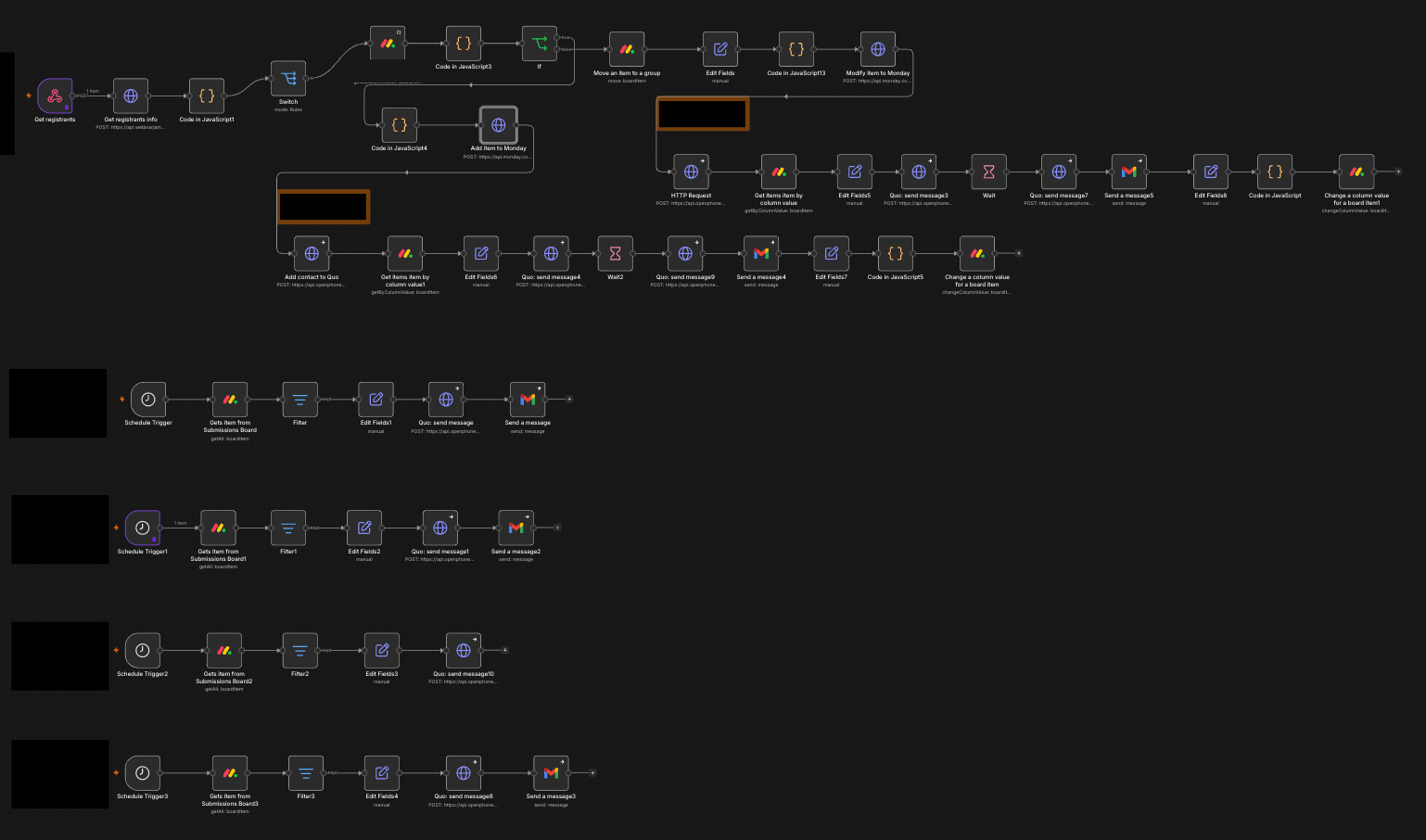
Registrants come off the webinar platform and get matched against the board before anything is written. Someone already on file gets moved and updated rather than duplicated. Anyone new gets created.
Then the confirmation goes out with their own session on it, and the reminder ladder starts: 24 hours, 3 hours, 1 hour, and at the start. Text and email, each one checking the board before it fires rather than sending blind.
The bridge page
The offer goes out live during the session. The link routes through a page I built that carries the attendee's identity from the webinar platform through as a campaign parameter.
It sounds like a detail and it's the reason any of this is measurable. Without it the payment and the signed agreement land as anonymous conversions with no way back to the person who sat through the webinar.
They attended
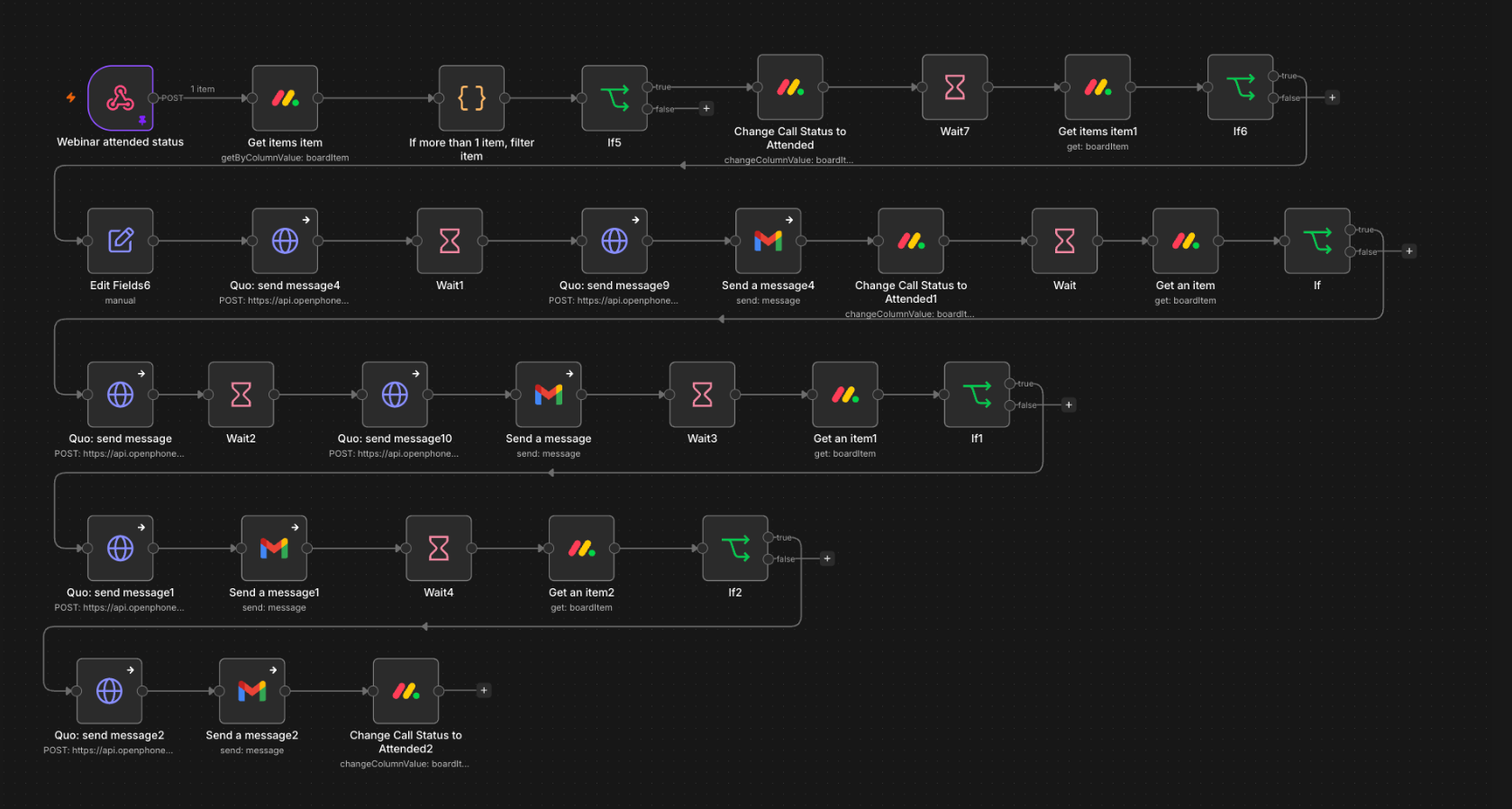
Attendance arrives as its own webhook. The record gets marked, duplicates get filtered out before anything sends, and the sequence runs on waits rather than a schedule, writing the status back at each stage so the board always reflects where someone actually is.
They didn't
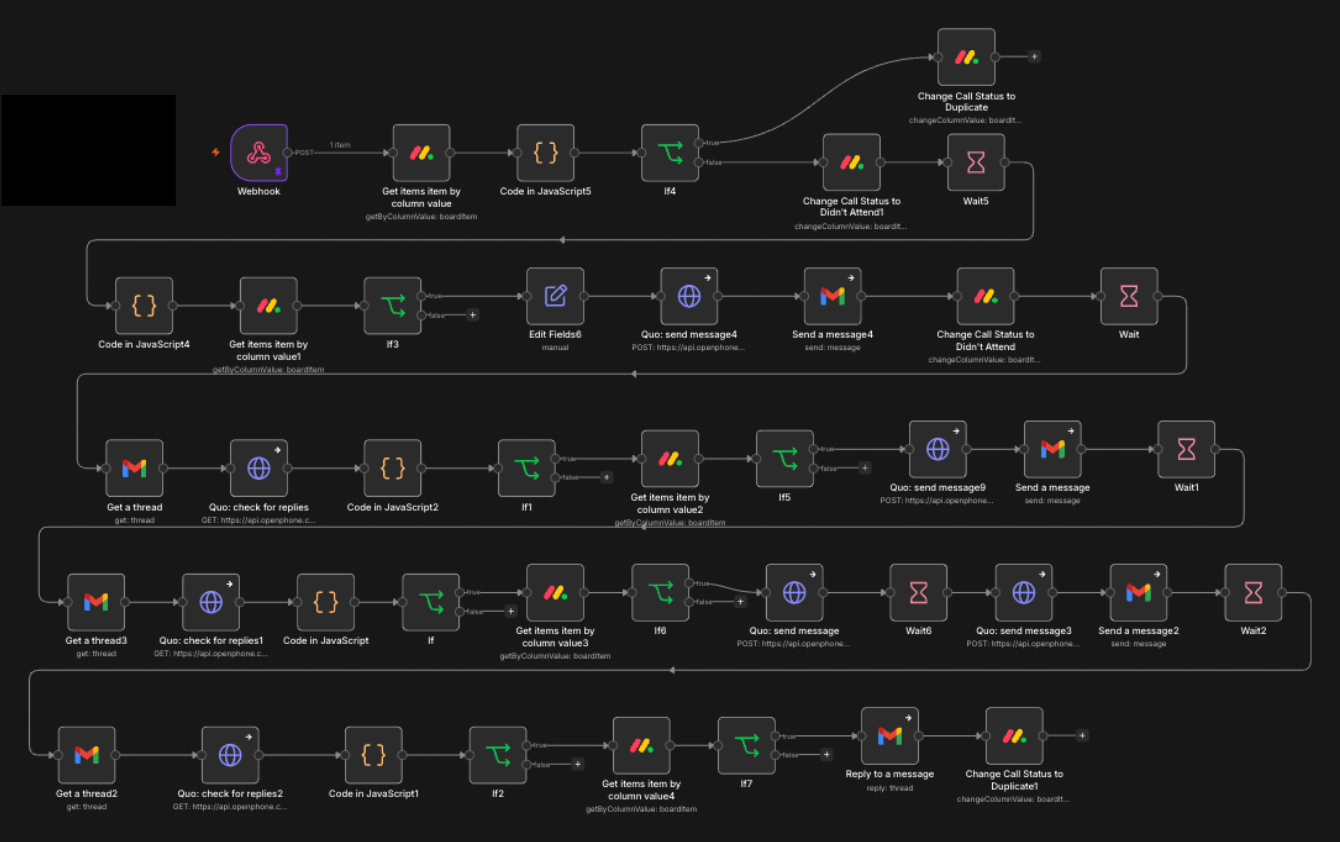
Same trigger shape, different branch, and this is the one I'd point at.
It doesn't just fire four messages into the void. Between steps it reads the thread and checks whether the person replied. If they did, the sequence stops pushing and hands off to a reply instead. Duplicates get caught and marked at the top so nobody gets two versions of the same chase.
The whole thing aims at the next available session rather than the one they missed.
Agreement signed
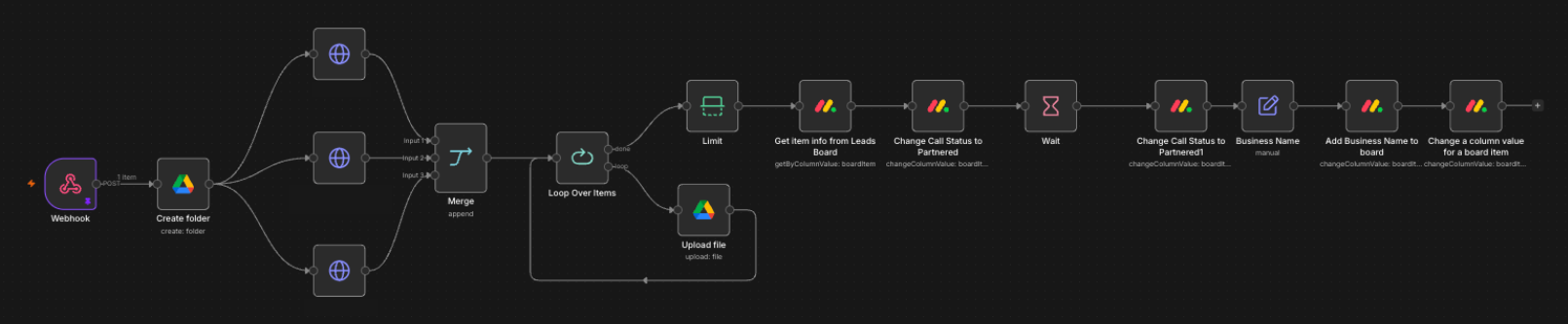
Signing kicks off the filing. A folder gets created, every document that came with the agreement is pulled and uploaded into it one at a time, and only then does the record move: status to partnered, business name written back, board updated.
Filing first, status second. If the documents fail, the record doesn't quietly claim to be complete.
Their page gets built
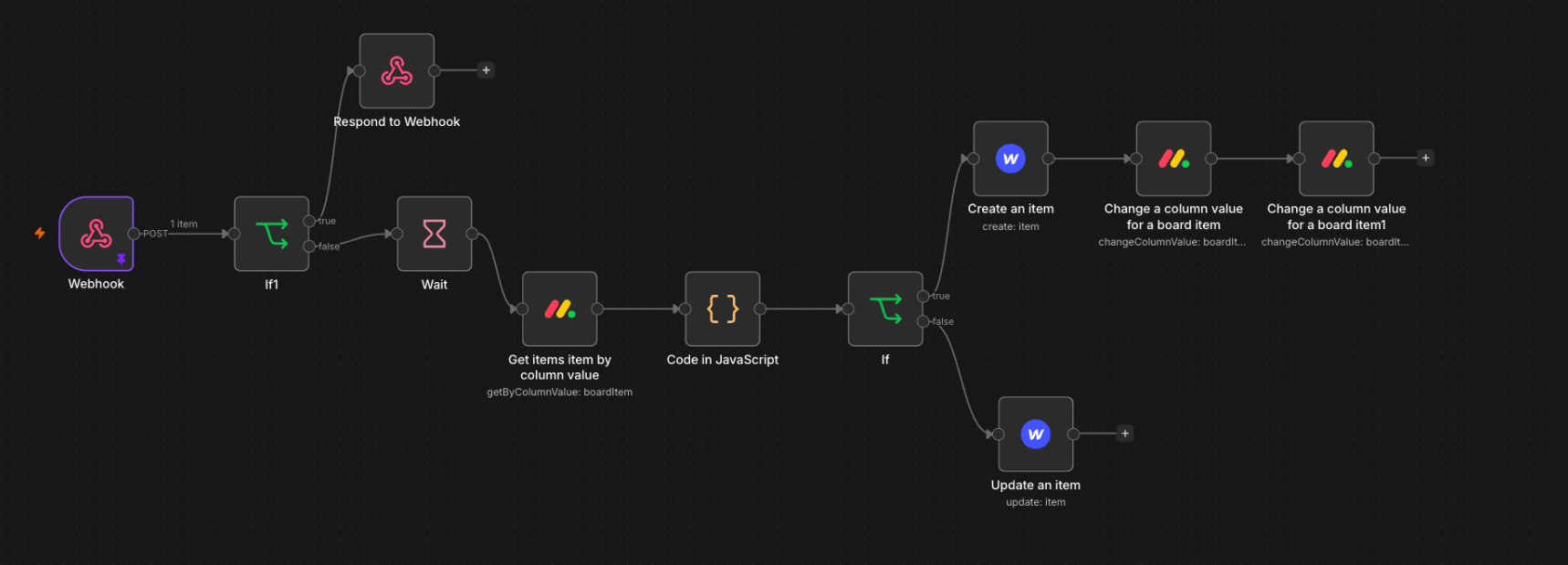
Landing on the partner board triggers their page. It checks whether one already exists and either creates it or updates it, then writes back to the board so the link lives with the record.
This is the one piece here I didn't come up with. It already existed in Zapier and I moved it onto n8n as part of migrating the rest of the platform across.
The handoff

Last step, and the one that taught me the most. It builds the person's details and their links, then hits a switch on business hours: inside them, the messages go now; outside them, they queue for the morning.
That switch exists because the first version didn't have it and people were getting texts at 1AM. It's the least clever thing in the whole system and probably the most useful.